


Tag Archives: energy

A historic milestone for Hanford and for Washington’s future

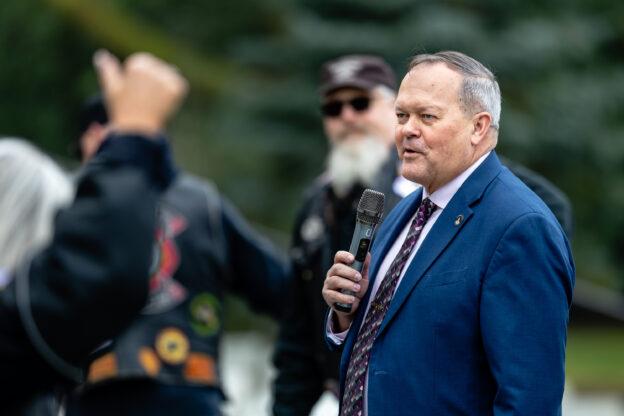
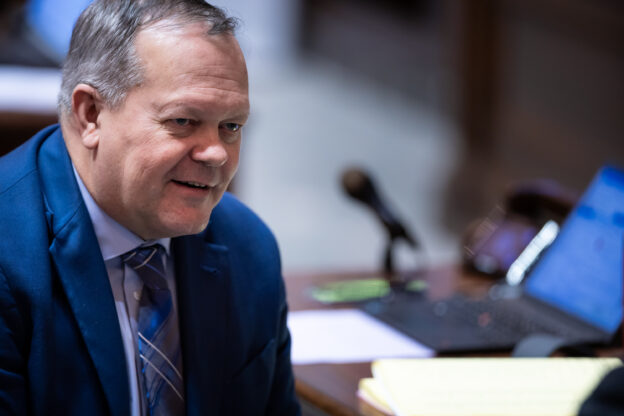
Sen. Matt Boehnke, R-Kennewick/Courtesy of the Washington State Senate

Last month marked a historic milestone for Hanford — and a turning point for the Tri-Cities region that has stood at the center of America’s nuclear legacy for generations. After decades of research, construction, and collaboration, the Hanford Site has officially begun transforming liquid nuclear and chemical waste into stable, solid glass through a process known as vitrification.

For the first time, waste stored for decades in Hanford’s aging underground tanks is being safely converted into solid glass logs, utilizing extreme heat — exceeding 2,000 degrees — to immobilize hazardous materials. This is an incredible scientific and engineering achievement, and a significant step forward in one of the most complex environmental cleanups anywhere in the world.

Hanford’s Waste Treatment and Immobilization Plant has been decades in the making. Construction began in 2002, supported by the hard work of thousands of skilled employees, engineers, scientists, and tradespeople, many of whom reside in the Tri-Cities. Their expertise and commitment made this possible.

Today, we can finally see the results of their dedication in the form of real progress toward a cleaner, safer Columbia Basin.

From the Manhattan Project to the Cold War, Hanford played a critical role in protecting our nation. But that legacy also came with challenges. For years, our region has carried the responsibility of ensuring the federal government lives up to its commitment to clean up what was left behind. This milestone shows what can happen when science, technology, and persistence come together for the good of our communities.

The vitrification process won’t eliminate radioactive waste, but it stabilizes it, making it far safer to manage and store. That means stronger protection for the Columbia River, for local agriculture and industry, and for the families who depend on this region’s natural resources.

The cleanup mission at Hanford continues to support thousands of family-wage jobs that drive our local economy and build the next generation of technical talent. These men and women, scientists, welders, operators, and engineers, are part of one of the most highly skilled workforces in the nation. Their professionalism and innovation are leading the way in safe, sustainable cleanup technologies that have global significance.

As your state senator, I’m committed to making sure the federal government keeps its promises to the people of the Tri-Cities. Washington taxpayers have invested decades into this work, and we deserve transparency, accountability, and consistent federal support to see it through.

Our local communities have done their part, and it’s time for Washington, D.C. to do its part.

This milestone is not the end of the Hanford story; it’s the beginning of a new chapter in innovation and environmental stewardship. Turning nuclear waste into glass represents one of the most advanced methods of waste stabilization in the world. It’s proof that when we invest in science and technology and keep our commitments, we can solve even the most challenging problems.

To everyone who has worked toward this day. The engineers, cleanup crews, contractors, local leaders, and advocates. I thank you. Hanford’s progress shows what can happen when a community leads with innovation, works together, and stays focused on building a safer, cleaner, and more sustainable future for all of Washington.

Stay informed about ongoing cleanup progress at Hanford and the technologies driving this historic effort by visiting Hanford.gov for project updates and community resources.
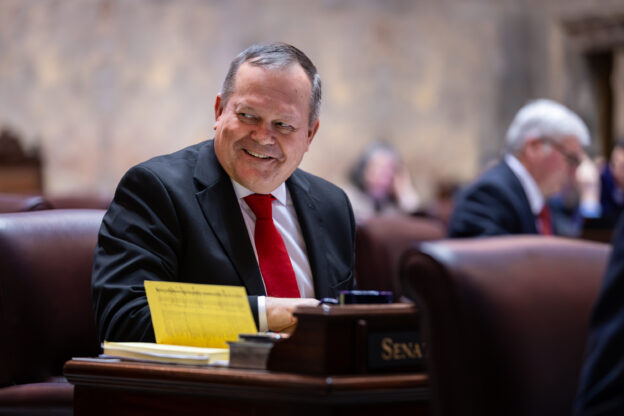
Action needed as region’s shortage of reliable energy nears crisis level, Boehnke warns

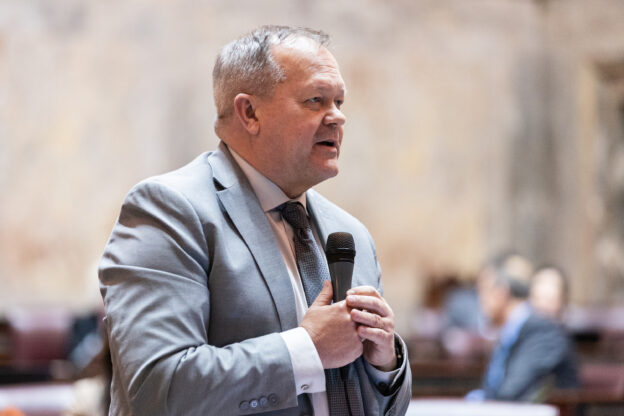
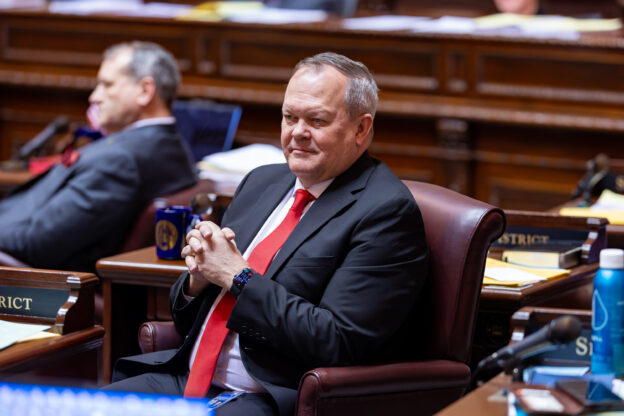
Sen. Matt Boehnke, R-Kennewick/CREDIT: Washington State Legislature

OLYMPIA… Senator Matt Boehnke today issued a strong warning about the Pacific Northwest’s energy future, citing a new analysis that projects potential power shortfalls in the region during extreme conditions.

The analysis, conducted by Energy + Environmental Economics for the region’s largest utilities, models thousands of years of weather, hydropower, renewable energy, and demand scenarios. It concludes that in a dry hydropower year combined with a multi-day cold snap, the Northwest could face reliability challenges as early as 2026.

Boehnke, R-Kennewick, emphasized the urgency:

“When our region’s grid faces drought, extreme cold, and high demand at the same time, the question isn’t if we will feel the strain; it is how much we can endure,” said Boehnke. “The clock is ticking for our energy infrastructure.”

In the study scenario, the power-reliability gap is expected to be around 1,300 megawatts by 2026 and could grow to approximately 8,600 megawatts by 2030 if planned resources are delayed.

The greatest risk of an energy shortfall happens during a year with low hydropower output, a prolonged cold winter wave, and simultaneously low wind and solar production.

“We need resilient backup systems and consumer protections,” Boehnke said. “Public safety is at risk. We need mechanisms for planned load shedding and alerting, better systems for consumers, and state policies that prioritize reliability along with clean energy.”

The region is experiencing an unprecedented rise in electricity demand, driven by population growth; the expansion of data centers, artificial intelligence and cloud infrastructure; the increasing adoption of electric vehicles; and the rise in air-conditioning loads.

“We need faster permitting and transmission build-out,” Boehnke said. “One of the biggest bottlenecks is getting the new generation and transmission online. We must accelerate the process, so Washington isn’t left waiting for projects while the demand surge is already here.”

“The Pacific Northwest also needs diverse, reliable power resources,” Boehnke said. “We need energy sources that remain strong when nature surprises us, including hydropower, advanced nuclear, storage, wind, solar, and cleaner natural gas.”

Boehnke highlighted that the 8th Legislative District and Tri-Cities region, where he serves, is home to leaders of significant clean-energy research and development. These include the Pacific Northwest National Laboratory, Energy Northwest, the Institute for Northwest Energy Futures, our higher education leaders, our union partners, and our strategic utility organizations, which are positioning Washington to be out front in modernizing the grid.

“We aren’t just observers, we are builders,” Boehnke said. “The Tri-Cities already have the talent and labs to support next-gen power. What we need now is the policy muscle.”

Boehnke concluded that the energy sector may need to accelerate investments in backup generation, storage, transmission, and demand-management programs. Policymakers must balance the state’s ambitious clean-energy goals with the practical realities of maintaining grid reliability.

Areas like the 8th, which have research and industrial energy users, are especially vulnerable to disruptions, making proactive legislative measures essential.

“We’ve been warned,” Boehnke said. “Now it’s time to act before the lights go out, costs increase, or families face a winter without the power they need. Washington can lead a smart, balanced transition, but only if we move with urgency, intelligence, and a full understanding that reliable energy is just as important as clean energy.”

###

Sen. Matt Boehnke represents Washington’s 8th Legislative District and serves as the Ranking Member on the Senate Environment, Energy, and Technology

Powering progress and leadership in the Western Energy Caucus

Sen. Matt Boehnke, R-Kennewick/Courtesy of the Washington State Senate

As summer winds down, I’m proud to share the latest from my work as Washington’s representative in the Western Energy Caucus (WEC)—a bipartisan regional coalition addressing critical energy challenges across the West.

This June, I was honored to be selected for the inaugural WEC cohort due to my leadership in energy innovation, clean-tech workforce development, and public-private collaboration. Alongside lawmakers from 11 western states, I engaged in the Caucus’s first international policy exchange in Denmark. There, we studied cutting-edge clean energy systems—from district heating networks to carbon capture technologies. These insights are already informing how we modernize Washington’s energy infrastructure.

The WEC, initiated by the Institute for Western Energy, is an invitation-only bipartisan group of state policymakers committed to collaborating on energy policy for the West. Its mission is to foster reliable, affordable, and clean energy across the region through public-private partnerships, strategic coordination, and policy development.

The WEC’s primary focus areas are grid reliability and resiliency, western transmission needs, advanced dispatchable generation and energy storage, wildfire mitigation, and carbon management and sequestration.

These priorities reflect both pressing needs and opportunities: growing energy demand, increasing climate volatility, and the chance to catalyze tens of thousands of clean-energy jobs while cutting costs and emissions.

The WEC will convene two more policy summits this year, where members will collaboratively craft model legislation, regional strategies, and best-practice frameworks to support state legislatures—including Washington’s—in advancing clean-energy solutions in 2026.

Why does this matter for Washington and the 8th District?

Local innovation and global inspiration. Exporting lessons from Denmark’s energy systems can accelerate our shift toward resilient and low-cost infrastructure here at home.

Economic and job growth. By championing a modern energy economy, we can drive job creation across Eastern Washington’s clean-tech, engineering, and construction sectors.

Regional leadership. As part of WEC, Washington, and especially the Tri-Cities area, has a voice in shaping broader Western energy policy, ensuring our region’s interests are front and center.

Strategic collaboration. This is collaboration in action—across states, parties, and sectors—to address energy and climate challenges with solutions that benefit people, businesses, and communities.

As your senator, I’m fully committed to leveraging the Western Energy Caucus to promote pragmatic, long-term energy strategies that build a more resilient and affordable future. Whether through enhanced grid resiliency, smarter transmission planning, or cleaner energy investments, we’re working to ensure Washington rises to meet the challenges and opportunities of our time.

Leading the charge with the Renewable Hydrogen Alliance

Sen. Matt Boehnke, R-Kennewick/Courtesy of the Washington State Senate

I’m honored to participate in the Northwest Renewable Hydrogen Conference this September, joining fellow policymakers as a featured speaker in the “Leading from the Legislature: Hydrogen Policy Champions” session.

The Renewable Hydrogen Alliance is a respected coalition advocating for renewable hydrogen, emissions-free fuel produced by splitting water using renewable electricity like wind, solar, and hydropower. Their mission is to advance clean energy beyond the electric grid through policy advocacy, regulatory outreach, and education of legislators, regulators, environmental groups, and industry stakeholders. 

The Alliance champions state-level legislative wins that directly benefit the renewable hydrogen sector, such as enabling public utilities to produce and sell renewable hydrogen, incorporating hydrogen into clean energy compliance, and supporting fuel-cell vehicle incentives.

The Alliance also connects members across utilities, clean-tech developers, transportation groups, tribal communities, and policymakers—creating a collaborative platform to build a region-wide hydrogen economy.

As a speaker, I plan to share how Washington can lead in hydrogen innovation while maintaining legislative oversight and accountability. RHA’s principles, like building workforce development, ensuring equity, and promoting clean transportation, align closely with my focus on responsible, economically beneficial policy. 

Together with industry and policy leaders, we’re shaping a future where renewable hydrogen powers our economy, supporting industries, rural communities, and environmental stewardship across the Northwest.

I’ll keep you updated on our progress following the conference and how these developments can translate into real gains for our district and state.

Sen. Matt Boehnke, R-Kennewick/Credit: Washington State Senate

Energy policy discussion at Tri-City Regional Chamber’s “Behind the Bill” advocacy roundtable

Sen. Matt Boehnke, R-Kennewick/Courtesy of the Washington State Senate

In early July, I spoke at the Tri-City Regional Chamber of Commerce’s Regional Advocacy Roundtable: Behind the Bill – How Policy Shapes Your Energy Costs—a timely forum examining how state-level decisions are directly influencing rising utility bills and the future of energy affordability in the Tri-Cities and across Washington.

The event brought together local business leaders, utility stakeholders, and policymakers for a candid and constructive discussion on energy legislation, rate impacts, and policy opportunities to ensure reliable, cost-effective power for homes and industries.

Energy policy is no longer something abstract. It’s showing up in monthly bills, gas prices, and infrastructure projects that affect every part of our lives. We need a balanced approach—one that supports innovation, protects affordability, and keeps reliability front and center.

During my presentation, I highlighted both successful and concerning legislation from the 2025 session. I warned about the long-term effects of HB 1409, which accelerates Washington’s Low Carbon Fuel Standard despite the lack of a mature biofuel market—potentially adding up to 77 cents per gallon at the pump by 2035.

I also raised red flags about several failed bills that could return in future sessions. For example, SB 5466 would have handed the state new eminent domain powers to site transmission lines, potentially overriding local authority and complicating permitting. Another bill, SB 5360, would have dramatically increased litigation and compliance costs for energy companies under new environmental enforcement standards.

On the positive side, I pointed to several bipartisan wins that support smarter energy investments, including his own legislation—SB 5445—which encourages the use of distributed energy resources to help utilities meet renewable energy targets more flexibly.

I also championed the long-overdue passage of HB 1912, which finally exempts agricultural fuels from the Climate Commitment Act, and HB 1990, which enables utilities to lower consumer costs through bond securitization during disasters or emergencies.

Additionally, I mentioned innovative proposals that didn’t pass this year but deserve renewed attention—like his SB 5091 to de-link Washington from California’s vehicle emissions standards and SB 5640, which would require proof of adequate water supply before siting new energy facilities.

The good news is we’re seeing more awareness around these issues. But we need continued engagement from communities like the Tri-Cities to Olympia. Events like this roundtable are key to keeping that conversation grounded in the real-world impacts.

As Washington continues to wrestle with the costs and complexity of its energy transition, I reaffirm my commitment to pragmatic energy solutions that protect consumers, empower innovation, and ensure a stable energy future for Eastern Washington and beyond.

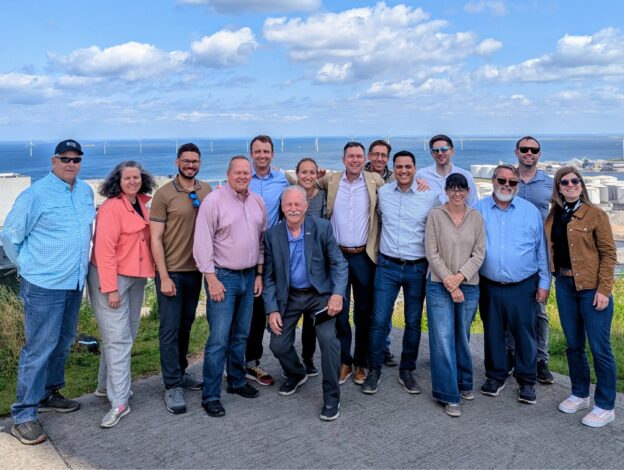
Sen. Matt Boehnke, R-Kennewick (4th from the left) with the Western Energy Caucus in Denmark. Photo courtesy of the Western Energy Caucus.

Boehnke joins Western Energy Caucus and international delegation to Denmark

Sen. Matt Boehnke, R-Kennewick (4th from the left) with the Western Energy Caucus in Denmark. Photo courtesy of the Western Energy Caucus.

This June, I  joined an elite bipartisan group of lawmakers from across the western United States to help launch the new Western Energy Caucus (WEC)—a regional initiative focused on advancing practical, forward-looking energy solutions that address grid reliability, affordability, and sustainability.

I was selected to represent Washington in the WEC based on my strong legislative record and leadership on energy innovation, clean-tech workforce development, and public-private partnerships. As part of the inaugural cohort, I participated in the caucus’s first international policy exchange in Denmark, where members explored global best practices in clean energy generation, transmission, and storage.

Energy policy is one of the most critical issues of our time. The decisions we make today will shape the future of economic growth, public safety, and environmental quality across our region. The Western Energy Caucus is about collaboration—working across state lines and party lines to develop energy systems that are reliable, affordable, and built to last.

The WEC brings together lawmakers from 11 western states to develop legislative strategies that tackle complex energy challenges like grid resilience, wildfire risk, transmission infrastructure, and carbon management. With the West experiencing growing energy demand and climate-related disruptions, I emphasized the importance of bipartisan cooperation and shared innovation to build smarter energy policy.

During the Denmark trip, the WEC delegation toured cutting-edge energy facilities, met with Danish energy officials and private sector leaders, and studied advanced technologies in district heating, offshore wind, and carbon capture—lessons I believe can be adapted for Washington’s energy future.

This international exchange helped reinforce the importance of integrating innovation, reliability, and cost-efficiency into our energy planning. Whether it’s expanding nuclear, improving our transmission grid, or supporting clean-tech jobs in the Tri-Cities, I’m committed to making sure Washington is a national leader in energy solutions.

The WEC will continue its work with two more summits later this year, where policymakers will develop model legislation and identify regional priorities for the 2026 legislative sessions. I will will remain a leading voice in these discussions, advocating for policies that benefit both the state of Washington and the entire western region.

As energy issues continue to evolve, my role in the Western Energy Caucus ensures that the Tri-Cities and Washington State have a strong seat at the table—one focused on thoughtful planning, innovation, and long-term economic strengths.

Solar meets soil: Boehnke’s landmark clean-energy bill becomes law

Sen. Matt Boehnke, R-Kennewick/Credit: Washington State Senate

OLYMPIA… On Tuesday, the governor signed a bipartisan measure from Sen. Matt Boehnke that accelerates the deployment of distributed energy technologies like solar, storage, and agrivoltaics across the state.

The new law is a major step forward for clean energy and land stewardship in Washington.

“This is a win for innovation, farmers, and every Washingtonian who want reliable, affordable, and clean energy,” said Boehnke, R-Kennewick. “With this new policy, we’re not just talking about clean energy—we’re building the on-ramps for it.”

The law created by Senate Bill 5445 encourages the development of small-scale, locally generated clean energy—such as solar panels installed on landfills, irrigation canals, highway rights-of-way, and farmland—by cutting red tape, creating tax certainty for agricultural landowners, and streamlining environmental review where appropriate.

It also ensures that farmers integrating solar into their operations (“agrivoltaics”) won’t lose their open-space tax classification—a change Boehnke called “common-sense policy that rewards conservation and productivity.”

“This opens the door to clean energy projects that don’t compete with farmland—they complement it,” Boehnke said. “Rural communities can now lead the way in building a resilient, flexible, and forward-looking energy system.”

The new law also strengthens utilities’ incentives to invest in distributed energy by allowing qualifying projects to count quadruple toward their renewable energy targets under the state’s Energy Independence Act.

“This is about innovation. It makes room for technologies that are smarter, smaller, and closer to the people,” Boehnke said. “It brings opportunity to places we’ve long overlooked—like capped landfills, parking lots, and even rooftops. That’s the future of energy.”

The policy was approved by the Legislature with near-unanimous support, reflecting broad interest in clean-energy growth paired with responsible land use.

“Washington has an opportunity to lead the nation in distributed energy innovation—and this law helps us get there,” Boehnke said. “This is how you build an energy policy that works from Benton County to Bellingham.”

The new law takes effect July 27.

###

Sen. Matt Boehnke, R-Kennewick/CREDIT: Washington State Legislature

Boehnke bill to expand renewable energy clears key House committee

Sen. Matt Boehnke, R-Kennewick/Credit: Washington State Senate

OLYMPIA… Legislation from Sen. Matt Boehnke that would expand renewable-energy development while balancing environmental regulations and land-use policies is moving closer to a final vote in the House of Representatives.

Senate Bill 5445 would promote distributed-energy projects and support “agrivoltaics,” meaning agricultural production underneath or adjacent to solar panels. It received unanimous approval from the House Environment and Energy Committee and now awaits placement on the voting calendar.

“Expanding distributed-energy projects is a win-win for our district,” said Boehnke, R-Kennewick. “This bill makes it easier to develop renewable energy while protecting farmland and supporting rural communities. By cutting red tape and allowing all energy options to coexist with agriculture, we’re ensuring that farmers can benefit from clean energy without jeopardizing their land-use status or tax benefits. This is smart policy that would strengthen both our economy and our energy future.”

SB 5445 also would encourage the growth of clean energy, enhance the state’s energy independence, reduce carbon emissions, and create economic opportunities in rural communities.

“This bill strikes the right balance between environmental responsibility and economic growth,” Boehnke said. “By streamlining regulations for renewable-energy projects and providing utilities with more flexibility in meeting clean-energy targets, we’re paving the way for a stronger, more resilient energy grid. This approach not only reduces our carbon footprint but also stimulates investment in rural areas, creating jobs and new opportunities for both landowners and businesses alike.”

Boehnke expects the bill to reach the House floor for a vote before the April 16 deadline for action on bills passed by the Senate.


#

Boehnke bill seeks to free Washington from California vehicle emissions rules

Sen. Matt Boehnke, R-Kennewick/Credit: Washington State Senate

OLYMPIA…Sen. Matt Boehnke, R-Kennewick, the new Republican leader on the Senate Environment, Energy and Technology Committee, has introduced a bill ahead of the 2025 legislative session that aims to separate Washington from California’s vehicle-emission standards.

Senate Bill 5091 would direct the state Department of Ecology to adopt rules that align with federal standards rather than California’s. Should the U.S. Environmental Protection Agency waiver that allows California’s emissions standards to depart from federal standards be reversed, the proposal is expected to receive attention in Olympia.

Boehnke’s bill also requires Ecology to submit yearly reports on Washington’s progress toward reducing greenhouse gas (GHG) emissions.

“Year after year lawmakers have tried in vain to get Ecology to track the state’s GHG emissions better,” Boehnke explained. “The public deserves to know, to determine if the programs meant to reduce emissions are actually working.”

The system requires reporting every two years, but Ecology has fallen behind and only has data up through 2019. Supposedly, Boehnke said, data through 2021 will be made available by the end of 2024.

“Whether the data is five years old or just three years behind, that isn’t good enough if we are to assess the effectiveness of programs like the Climate Commitment Act.,” he explained.

Boehnke noted that SB 5091 does not change the state’s GHG targets but would simply hold the state more accountable for its progress toward those targets.

Under the federal Clean Air Act, the federal government sets vehicle emissions standards, but California is allowed to differ, and states may choose to follow California’s rules. Washington is one of several that has.

Boehnke said the incoming presidential administration is widely expected to rescind the waiver recently granted to California waivers. Washington law still requires DOE rules to match California. If SB 5091 passes, this will change, and Washington will follow the federal rules.

Boehnke expects his bill to be considered by the Senate ENET committee. The 105-day legislative session is scheduled to start Jan. 13 and end April 27.

AUDIO: A new bill seeks to separate Washington from California’s vehicle-emission standards while enhancing emissions reporting. Tracy Ellis explains. #waleg

LISTEN: https://ow.ly/hFvE50Uvvnq

#

Boehnke to lead Republicans on Senate energy committee

Sen. Matt Boehnke, R-Kennewick/Credit: Washington State Senate

OLYMPIA … Sen. Matt Boehnke, R-Kennewick, has been elevated to Ranking Member on the Senate Environment, Energy, and Technology Committee (ENET) for the 2025 legislative session.

He will continue on the Senate Ways and Means Committee and is joining the Senate Higher Education and Workforce Development Committee as well as the powerful Rules Committee.

Boehnke, who served on the ENET committee during the Legislature’s 2023-24 term, said he is honored to move up to the committee’s top Republican position.

“The work of the ENET committee lines up well with the 8th District’s interests. I am particularly focused on pursuing advances in nuclear power, hydrogen, and emergency technologies that support grid reliability, energy supply, and energy conservation, as those are important not only here but statewide,” said Boehnke.

“Having a larger role on this committee will also help me in reaching across the aisle and collaborating with the chair and the majority party to address the serious issues impacting our state.”

As a member of Ways and Means, Boehnke will be involved in developing the next state budget, and with the WSU Tri-Cities campus in his district, the new higher-education assignment is a good fit.

The Rules Committee serves as a gatekeeper, determining which of the bills approved at the committee level will be eligible for consideration by the full Senate.

More information about Boehnke is at mattboehnke.src.wastateleg.org. The 2025 Legislative Session begins Jan. 13, 2024,

#